

How to Fix Car Ignition Problems Without Guesswork
A key that will not turn, a dashboard that stays dark, or an engine that will not crank can stop your day in seconds. If you are searching for how to fix car ignition trouble, start by identifying what the vehicle is actually doing. An ignition problem is not always a broken ignition cylinder, and forcing the wrong repair can turn a manageable service call into a more expensive replacement.
The safest approach is simple: rule out the easy causes first, avoid forcing the key or steering wheel, and call a qualified automotive locksmith when the lock cylinder, key, or transponder system is involved. Your security and your vehicle matter, especially when you are stranded.
How to Fix a Car Ignition: Check the Symptoms First
The word “ignition” can describe several connected parts. The ignition cylinder is the mechanical part where you insert the key. The ignition switch sends electrical power to the vehicle. On newer cars, a chip key, key fob, or push-button system also has to recognize the correct programmed key before the engine will start.
Pay attention to the exact symptom. If the key will not enter or rotate, the issue may be the key, cylinder, or steering-wheel lock. If the key turns but the dash lights do not come on, the ignition switch, battery connection, or electrical system may be at fault. If the dash lights come on but the engine does not crank, the cause could be the battery, starter, neutral safety switch, or anti-theft system.
That distinction matters. Replacing an ignition cylinder will not fix a dead battery, and repeated attempts to start a car with a damaged key can damage the cylinder itself.
When the Key Will Not Turn
A locked steering wheel is one of the most common reasons a key seems stuck. This often happens after the front wheels were turned when the vehicle was parked. The steering lock puts pressure on the ignition cylinder, making the key feel frozen.
Keep the brake applied and place the vehicle in Park. Gently move the steering wheel left and right while turning the key with light, steady pressure. One direction will usually have a little more movement. Turn the wheel in that direction while carefully turning the key. Do not jerk the wheel or twist the key hard.
If the key still will not turn, inspect it for visible wear. A bent key, cracked plastic head, worn grooves, or damaged chip housing may keep it from operating the ignition properly. If you have a spare key, try it once. A spare that works points to a worn or damaged primary key rather than a failed ignition.
Avoid spraying random lubricants into the cylinder. Some products collect dirt, leave residue, or interfere with delicate components. Do not insert screwdrivers, picks, or other objects into the keyway. These methods can break internal pins and make a key extraction or full ignition replacement necessary.
What if the key turns only sometimes?
An ignition that works inconsistently deserves prompt attention. It may be a worn key, worn internal cylinder components, or debris inside the keyway. Waiting until the key will not turn at all can leave you stranded at work, home, or on the road.
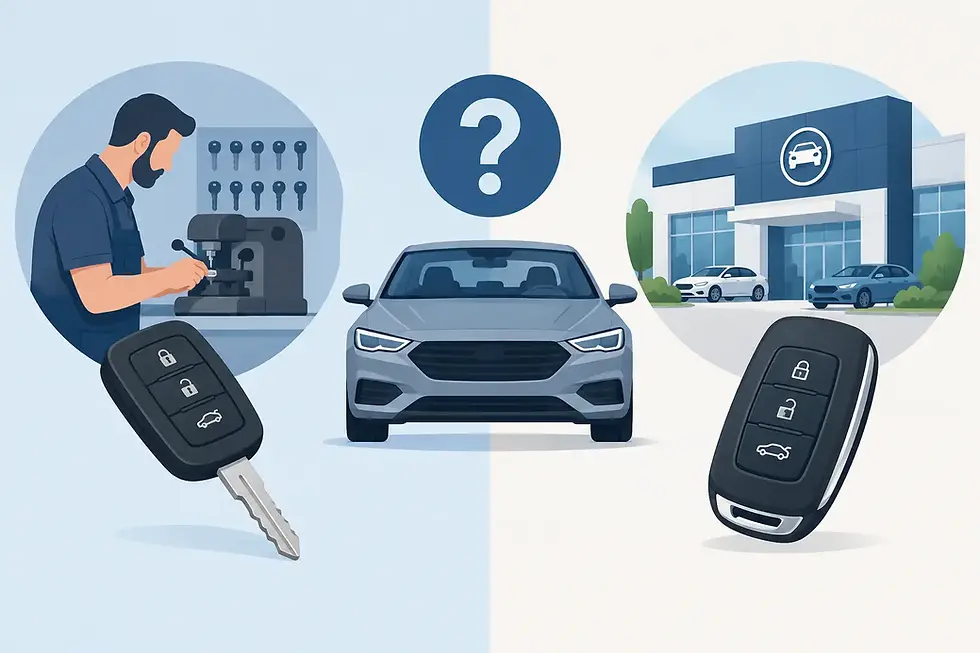
A mobile locksmith can inspect the key and cylinder, create a properly cut replacement key when appropriate, or replace and rekey the ignition so it works with your vehicle’s existing key setup when possible.
Rule Out a Weak Battery Before Blaming the Ignition
If the key turns normally but the car does not start, check for signs of battery trouble. Dim headlights, clicking sounds, slow cranking, or no interior lights often point to a weak battery or poor battery connection rather than an ignition failure.
Make sure the battery terminals appear secure and free of heavy corrosion. If you know the battery is weak, use a proper jump-start procedure or have the battery tested. Do not continue cycling the key repeatedly. That drains an already weak battery further and can make diagnosis more confusing.
A vehicle with bright dashboard lights that still does not crank may have a different issue. Try starting in Neutral with the parking brake fully applied. If it starts in Neutral but not Park, the shift-position or neutral safety switch may need service. This is a mechanical or electrical issue, not usually an ignition-cylinder repair.
Check the Key Fob and Anti-Theft System
Many late-model vehicles will allow the key to turn or the push-button system to power on, but they will not start unless the vehicle recognizes the programmed transponder chip or smart key. A damaged key fob, drained fob battery, or unprogrammed replacement key can create a no-start condition that looks like an ignition problem.
For a push-button start vehicle, hold the key fob close to the start button or use the backup starting location listed in your owner’s manual. Many vehicles have a designated spot in the console, cup holder, or steering column area for a weak fob battery. If the car starts this way, replace the fob battery soon.
For a traditional chipped key, inspect the key head. If it is cracked, separated, or has been exposed to water, the transponder may no longer communicate with the immobilizer. A plain metal copy may unlock the door and turn the ignition, but it may not start the engine. The replacement must be correctly cut and programmed for the vehicle.
If a security or key-shaped warning light stays on while you try to start the car, stop forcing the issue. The car may be rejecting the key. An automotive locksmith with the right diagnostic and programming equipment can determine whether you need key programming, a replacement fob, or ignition-related service.
Signs the Ignition Cylinder Needs Professional Repair
A failing ignition cylinder usually gives warning signs before it stops working completely. You may notice that the key must be wiggled to turn, that it is difficult to remove, or that it only works when inserted a certain way. The key might turn to accessory mode but resist moving to the start position.
These problems are not a good candidate for a do-it-yourself repair unless you have vehicle-specific training and tools. Modern steering columns can contain airbags, anti-theft components, wiring, and fragile trim pieces. Removing the wrong part or disconnecting electrical components incorrectly can create safety issues or add diagnostic codes.
Professional ignition service may involve repairing or replacing the cylinder, decoding the lock, cutting a matching key, and programming the key if the vehicle uses an immobilizer. The right solution depends on the make, model, year, and condition of the existing keys. In some cases, a new ignition can be keyed to match your door locks. In others, a separate ignition key may be the practical option.
Do Not Ignore a Key Stuck in the Ignition
A key that will not come out is frustrating, but pulling harder is rarely the answer. First, confirm the vehicle is fully in Park. Move the shifter firmly into Park, then gently turn the steering wheel while returning the key to the off position. On automatic vehicles, a worn shifter mechanism or shift interlock can prevent key removal.
If the key is bent or the ignition feels jammed, stop. A broken key inside the cylinder is more difficult to remove and can leave the vehicle unable to start. If the key is stuck while the engine is running, do not leave the vehicle unattended. Get professional help as soon as possible.
When to Call a Mobile Automotive Locksmith
Call for professional assistance if your key will not turn after trying the steering-wheel release, if the key is damaged or stuck, if the vehicle rejects a chipped key, or if you have lost all working keys. A mobile automotive locksmith can come to your location, which is especially useful when the car cannot be driven to a shop.
For Utah drivers facing an urgent key or ignition issue, Locksmith Experts provides mobile automotive locksmith support for ignition repair, key replacement, and key programming. A qualified technician can verify the cause before recommending a repair, helping you avoid replacing parts that are not actually failing.
Have your vehicle’s year, make, model, location, and available keys ready when you call. You should also expect to provide proof of ownership or authorization. This protects you, your vehicle, and everyone involved in the service.
A stubborn ignition is often your car’s way of asking for attention before a complete failure. Treat the key gently, skip the improvised tools, and get the right help before a small delay becomes a roadside emergency.

Comments