

Why Is My Key Fob Not Working? Quick Fixes
A key fob can fail at the worst possible moment: in a grocery store parking lot, outside your home before work, or when your car is running late for school pickup. If you are asking, “why is my key fob not working,” the problem may be as simple as a weak battery, but it can also point to programming trouble, physical damage, or a vehicle issue that needs professional attention.
Before assuming the key fob is ruined, take a calm, safe approach. A few quick checks can narrow down the cause and help you decide whether you need a replacement battery, a spare key, or mobile locksmith service.
Start With the Simple Checks
Stand close to the vehicle and try the fob again. A weak fob battery often has less range before it stops working completely. If the buttons work only when you are beside the driver’s door, the battery is one of the most likely causes.
Next, try every button. If the lock, trunk, and panic buttons all fail, the fob may not be sending a signal. If one button fails while the others work, the issue could be a worn or damaged button rather than the battery or programming.
If you have a spare fob, test it. This is one of the fastest ways to identify the source of the problem. When the spare works normally, your primary fob is likely the issue. When neither fob works, the vehicle battery, receiver, door lock hardware, or vehicle electronics may be involved.
Do not forget the mechanical key stored inside many modern fobs. It can usually open the driver’s door when the remote functions are unavailable. The location and release method vary by vehicle, so avoid forcing the fob casing or door lock. Using the mechanical key can get you inside, but it may not start a push-button vehicle if the fob’s chip is not recognized.
Why Is My Key Fob Not Working? Common Causes
The key fob battery is weak or dead
Most key fobs use a small coin-cell battery. These batteries typically last several years, but extreme temperatures, frequent use, or a fob left near the vehicle can shorten battery life. Utah winters can make a fading battery seem completely dead, especially during a cold morning.
Common signs include reduced range, intermittent operation, a dim fob indicator light, or a dashboard message about a key battery. Replacing the battery may solve the issue, but use the exact battery type specified for your fob. Installing the wrong size, placing it in backward, or damaging the internal contacts can create a new problem.
If you replace the battery and the fob still does not work, do not keep opening and closing the case repeatedly. The problem may be the circuit board, the buttons, or the fob’s programming.
The fob has water or physical damage
Key fobs spend a hard life in pockets, bags, cup holders, and laundry loads. A drop on concrete can loosen a battery contact or crack the circuit board. Moisture from rain, snow, a spilled drink, or a washing machine can corrode internal components.
Look for obvious signs such as a cracked case, sticky buttons, corrosion near the battery, or a loose battery holder. If the fob got wet, remove the battery if you can do so safely and allow the fob to dry fully. Do not use a high-heat dryer or place it in an oven. Heat can warp the case and damage electronic components.
A locksmith can inspect whether the fob can be repaired, reprogrammed, or needs replacement. In many cases, replacing the shell alone is not enough because the electronic chip inside is what communicates with the vehicle.
The key fob lost programming
Your fob must be paired with your vehicle’s security system. It can lose synchronization after a dead battery, electrical work, a failed module, or an attempted DIY programming process. Some vehicles allow limited owner programming, while others require professional diagnostic equipment and security credentials.
This is where vehicle make, model, and year matter. A simple remote for an older vehicle may be straightforward to program. A newer push-button start fob with a transponder chip or proximity system often requires specialized tools. Repeatedly trying random online programming instructions can waste time and may leave you stranded.
Radio interference is blocking the signal
Key fobs use radio signals, and certain locations can interfere with them. You may notice the fob works at home but not in one parking garage, near a large building, or at a particular workplace. Nearby radio equipment, wireless devices, or strong electronic interference can occasionally affect remote operation.
Move the vehicle or walk a short distance away from the source if possible, then try again. If the fob resumes working elsewhere, interference may have been the cause. If it fails everywhere, focus on the fob and vehicle instead.
The car battery or vehicle receiver has a problem
A key fob can be working perfectly while the vehicle cannot respond. A weak or dead car battery may prevent power locks, remote entry, or push-button starting from operating normally. Dim headlights, slow cranking, clicking sounds, or no interior lights are clues that the vehicle battery deserves attention.
The vehicle’s keyless-entry receiver, antenna, fuse, door lock actuator, or body control module can also fail. If one door will not respond but the others do, a door actuator may be the culprit. If neither of two functioning fobs can communicate with the vehicle, a vehicle-side electrical or receiver issue becomes more likely.
A locksmith can confirm whether the fob is transmitting and whether a replacement or programming service is appropriate. If the vehicle’s electrical system is at fault, you may need automotive repair after gaining access to the car.
What to Do When a Push-Button Start Will Not Recognize the Fob
A push-button start vehicle may still start with a weak fob battery because many models have a backup detection point. Depending on the car, you may need to hold the fob directly against the start button or place it in a designated slot, console area, or cup holder. Check the owner’s manual for your vehicle’s emergency start procedure.
Keep the brake pedal firmly pressed, use the correct gear position, and try the emergency detection method once or twice. If the vehicle shows “Key Not Detected” and will not start, do not force the ignition button or repeatedly drain the car battery by trying over and over.
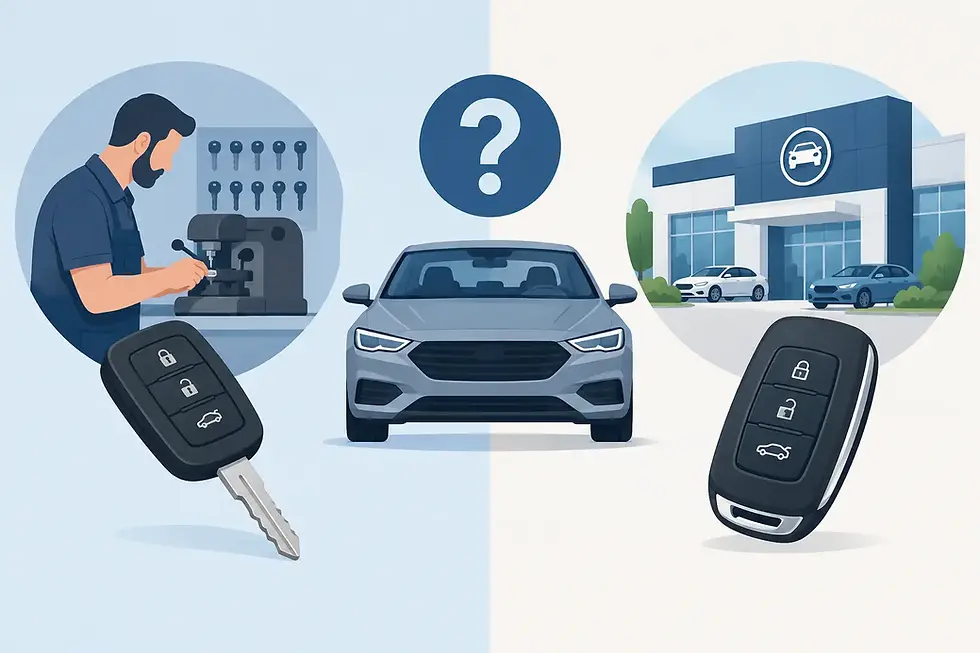
If you are in an unsafe location, cannot access the vehicle, or need a replacement key quickly, call for mobile help. A trained automotive locksmith can create and program many replacement keys and fobs on-site, helping you avoid a tow or a long wait at a dealership.
Avoid These Key Fob Mistakes
A key fob issue feels small until it leaves you unable to get into or start your car. The wrong DIY fix can make the situation more expensive. Avoid prying the fob open with a knife, using an unverified battery size, spraying cleaner into the buttons, or ordering a generic fob without confirming compatibility.
Be cautious about buying used key fobs as well. Many can be physically reused, but not every fob can be programmed to every vehicle, and a used fob may have hidden damage. The correct frequency, chip type, key blade, and programming requirements all have to match.
Never leave a working spare key fob inside the vehicle as a permanent backup. It may create a security risk, and some vehicles will not lock normally with a fob inside. A better plan is to keep a tested spare in a secure location and replace a weakening fob battery before it fails completely.
When to Call a Mobile Locksmith
Call a professional when the fob is lost, broken, wet, unresponsive after a battery change, or no longer recognized by the vehicle. Fast help also makes sense if you are locked out, stranded away from home, or need a new key programmed the same day.
Locksmith Experts provides mobile automotive locksmith support throughout Salt Lake City, Layton, and surrounding Utah communities. A qualified technician can assess the fob, open the vehicle without unnecessary damage, cut a replacement key when needed, and program compatible keys or remotes on-site.
Keep your vehicle identification number, photo ID, and proof of ownership available if possible. These details help verify ownership and allow the technician to identify the correct key solution. If your documents are inside the locked vehicle, explain that when you call.
A failed key fob does not have to turn into an all-day disruption. Start with the battery and spare-fob checks, use the mechanical key if necessary, and get professional help before a damaged or unprogrammed fob leaves you without a way to drive.

Comments