
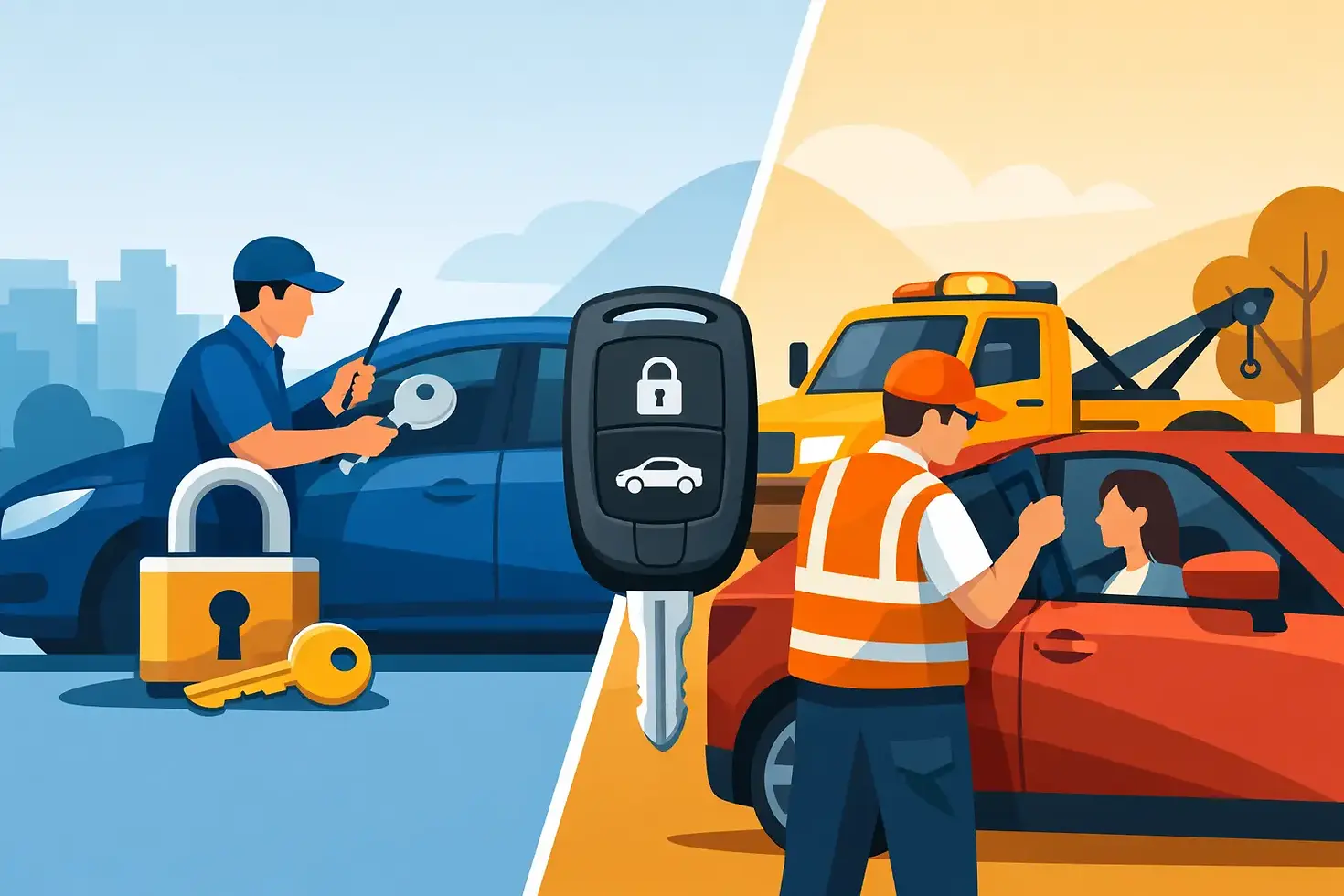
Locksmith Versus Roadside Assistance for Vehicle Lockouts
You are standing beside your car in a Salt Lake City parking lot, your keys are on the driver’s seat, and the weather is not waiting for you to make a decision. The locksmith versus roadside assistance question matters because the right call can mean a quick return to the road instead of a tow, a long wait, or a second service appointment.
Both services can help drivers in certain situations, but they are built for different problems. Roadside assistance is designed for common vehicle breakdown needs. A mobile automotive locksmith is trained to solve lock, key, and ignition problems at your location. Knowing the difference helps you get help now without paying for a service that cannot finish the job.
Locksmith Versus Roadside Assistance: The Main Difference
Roadside assistance programs usually provide broad emergency support for drivers. Depending on your plan, that may include jump-starts, tire changes, fuel delivery, towing, and basic lockout entry. It is a useful membership benefit when the problem is mechanical or you simply need your vehicle opened.
A locksmith focuses on access and security. For vehicle issues, that includes opening locked cars, making replacement keys, programming transponder keys and key fobs, repairing or replacing ignitions, extracting broken keys, and addressing damaged locks. A locksmith comes prepared to diagnose the lock-and-key issue rather than only getting you through the immediate moment.
The practical difference is simple: roadside assistance may open the door, while a locksmith can often restore your ability to start and secure the vehicle. If your keys are lost, broken, damaged, or no longer communicating with the car, roadside assistance alone may not be enough.
When Roadside Assistance Is the Better Call
Roadside assistance makes sense when your key is safely inside the vehicle, the lock appears normal, and you only need entry. If you have an active membership and the provider can respond promptly, basic lockout service may be included in your plan. It can be a reasonable first option for a straightforward situation.
It is also the right resource for problems unrelated to keys. A dead battery, flat tire, empty fuel tank, overheating engine, or mechanical breakdown calls for roadside support or a tow provider. A locksmith cannot repair your alternator, replace a tire, or transport your vehicle to a shop.
There are trade-offs. Some roadside plans limit the number of service calls, set a maximum reimbursement amount, or require you to wait for a contracted provider. Lockout coverage can also be limited to opening the vehicle. If the door opens and you discover the key is missing, broken, or unusable, you may still need a locksmith afterward.
When You Need an Automotive Locksmith
Call a locksmith when the issue involves the key, lock, fob, or ignition itself. This is especially true if you have lost every working key, snapped a key in the lock or ignition, have a malfunctioning remote, or cannot turn the ignition cylinder.
Modern vehicles make this distinction even more important. Many cars use transponder chips, proximity fobs, push-button start systems, and electronic immobilizers. A blank key is not enough. The replacement often needs to be cut correctly and programmed to communicate with the vehicle. Roadside assistance dispatchers generally do not provide that level of automotive key service.
A qualified mobile locksmith can often perform the work where your vehicle is parked. That can save you from arranging a tow to a dealership, waiting for parts, or leaving your car unsecured overnight. The exact solution depends on the vehicle’s make, model, year, and security system, but a locksmith can assess the problem before recommending the next step.
Lost keys require more than entry
If you cannot find your keys, getting into the car is only part of the problem. You still need a way to drive it. A locksmith can create and program a replacement key for many vehicles, then help ensure the lost key no longer presents an avoidable security concern when the vehicle supports key deletion or reprogramming.
That matters when keys may have been stolen, not merely misplaced. A lost key paired with your vehicle registration or home address creates a different level of risk. Ask the locksmith what options are available for your vehicle so you can make a practical decision about access and security.
Ignition trouble is not a towing question by default
A key that will not turn can look like an engine problem, but it may be an ignition or worn-key issue. Forcing the key can damage the cylinder or break the blade, turning a manageable repair into a more involved one.
If the steering wheel is locked, try gently moving the wheel while turning the key without force. If that does not work, call a locksmith. A technician can determine whether the problem is the key, ignition cylinder, or another component. If the vehicle has an electrical or engine issue after the key turns, then roadside assistance or a mechanic may be the next call.
What to Expect From Each Service
When you contact roadside assistance, be ready to provide your location, vehicle details, membership information, and the type of help needed. Confirm whether lockout service is covered and ask whether the dispatched provider can make or program keys. This prevents surprises after the technician arrives.
When you call a locksmith, provide the vehicle make, model, year, location, and a clear description of what happened. Mention whether you have any working keys, whether the key broke, and whether the car uses a remote fob or push-button start. The more accurate the information, the better the technician can prepare for the job.
A professional locksmith will also verify that you are authorized to access the vehicle. Keep your ID, registration, insurance card, or other proof of ownership available if possible. If those documents are inside the locked vehicle, explain that upfront. Verification protects vehicle owners and helps prevent unauthorized entry.
Cost, Wait Time, and Convenience
Cost is not always as simple as “membership equals free.” Roadside plans may cover a basic lockout but exclude replacement keys, programming, and repairs. If you need a locksmith after the roadside provider opens the door, the total cost may be higher than calling the right specialist first.
A locksmith’s price depends on the vehicle, key type, time of day, travel distance, and the work required. Programming a smart key or repairing an ignition is more involved than opening a standard car door. Ask for clear pricing information before work begins, including any service-call fee and the expected range for the repair or replacement.
Wait time depends on local demand, weather, traffic, and technician availability. For urgent lock-and-key problems in Salt Lake City, Layton, and surrounding Utah communities, Locksmith Experts provides mobile support for automotive lockouts, key replacement, programming, and ignition concerns. The goal is not just to get the door open. It is to get you safely back in control of your vehicle.
Choose the Service That Solves the Whole Problem
Use roadside assistance for tires, batteries, fuel, towing, and simple entry when your plan offers a convenient response. Choose a locksmith when the problem is a lost key, damaged key, faulty fob, stuck ignition, or vehicle lock that needs professional attention.
If you are unsure, describe the exact situation before dispatch. One question can save time: “Will this service get my car started, or only get the door open?” Keep that distinction in mind, save a trusted local locksmith’s number before an emergency, and you will have a clear next step when a stressful lockout happens.


Comments