

How to Program Key Fob: What Works and What Doesn't
A key fob can stop working at the worst possible moment: outside your home, in a parking lot after work, or when you are already late. Learning how to program key fob replacements can help in a few situations, but modern vehicles do not all follow the same process. The right method depends on the vehicle, the type of fob, and whether you still have a working key.
For many Utah drivers, the safest answer is simple: identify what kind of key you have before buying a replacement or trying random online instructions. A fob that looks correct may still have the wrong chip, frequency, or internal programming requirements.
First, Know What Type of Key Fob You Have
People often call every remote a key fob, but automotive keys fall into several categories. A basic remote only controls door locks, trunk release, or panic functions. A remote-head key combines the remote buttons and metal key blade in one unit. A transponder key contains a chip that must be recognized by the vehicle before the engine will start.
Smart keys and proximity fobs are more advanced. They let you start the vehicle with a push button while the fob is nearby. These systems commonly need professional diagnostic equipment to register a new fob with the vehicle's security system.
That difference matters. You may be able to restore the lock and unlock buttons on an older vehicle at home, yet still be unable to start the car because the transponder chip was not programmed. A fob can appear to work until you press the start button or turn the ignition.
Before You Try to Program a Key Fob
Start with the simple checks. A weak battery is one of the most common reasons a key fob seems dead. Replace it with the exact battery type listed inside the fob or in the owner's manual. Make sure the battery is installed in the correct direction and that the contacts are clean and firmly in place.
Next, confirm that the replacement is actually compatible. Match the vehicle year, make, model, and trim level. If possible, compare the FCC ID, part number, button layout, and frequency printed on the original fob. Compatibility listings can be broad, and a fob advertised for a certain brand may not work with every model or model year.
It also helps to determine what problem you are solving. If the original fob suddenly stopped responding but starts the vehicle, the issue may be the battery, damaged buttons, or a worn circuit board. If the car will not recognize any key, the problem may involve the vehicle battery, antenna, receiver, ignition, or immobilizer system. Programming a new fob will not repair a faulty vehicle component.
How to Program a Key Fob on Older Vehicles
Some older vehicles have an owner-programming procedure for remote lock functions. The instructions usually involve sitting in the driver's seat, closing the doors, cycling the ignition in a specific sequence, and pressing buttons on the fob when the vehicle enters programming mode.
The exact order, timing, and number of ignition cycles vary by manufacturer. Do not assume that instructions for a similar model will work for yours. Using the correct owner's manual procedure is the best first step. If your vehicle supports it, the locks may cycle or the horn may chirp to confirm that programming mode has started.
Keep these practical points in mind:
Have every fob you want to use with you before you begin. Some vehicles erase previously programmed remotes when a new one is added.
Use a fresh fob battery and a fully charged vehicle battery. Low voltage can interrupt the process.
Complete each step within the required time window. Many systems exit programming mode quickly.
Test lock, unlock, trunk, panic, and remote start functions after programming.
If the procedure does not work after one or two careful attempts, stop rather than repeatedly cycling the ignition. The vehicle may require a different procedure, a compatible fob, or professional programming.
Remote Buttons vs. Engine Starting
This is where many drivers get stuck. A vehicle may accept a remote programming procedure for the buttons while refusing to start with the replacement key. The engine-start authorization is usually controlled by a transponder chip or proximity-key system, not by the remote lock functions alone.
On some older models, an existing working transponder key can be used to add another key. On many newer vehicles, however, adding a key requires a scanner, security access, and verified key data. This is designed to reduce the risk of unauthorized keys being added to the vehicle.
Why Newer Smart Keys Usually Need a Locksmith
Push-button-start vehicles, proximity keys, and many late-model transponder systems are built around anti-theft technology. They may require a locksmith or dealership to connect diagnostic equipment, communicate with the vehicle computer, and register the new key correctly.
A professional can also confirm whether the fob is the right one before programming begins. This can save money compared with paying for programming only to discover the aftermarket fob is incompatible or defective.
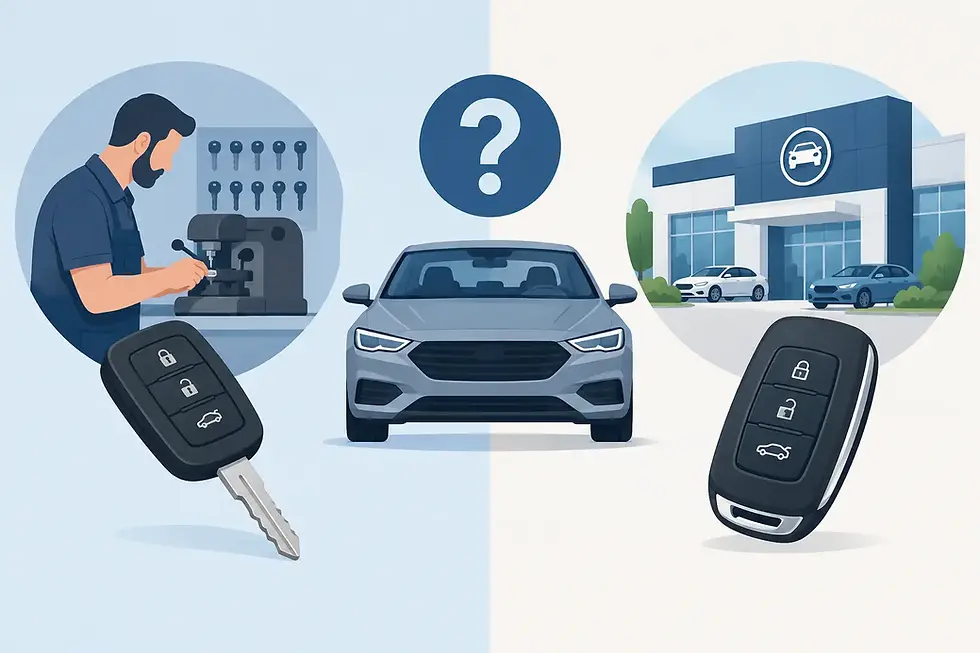
There is a trade-off. A dealership may be the right choice for a very new vehicle, warranty issue, or brand-specific software update. A qualified automotive locksmith is often more convenient when the car cannot be driven, the key is lost, or you need help where the vehicle is parked. Mobile service can include cutting the key blade, programming the chip, and testing the fob on site.
Common Reasons Key Fob Programming Fails
Programming problems are not always caused by user error. A replacement fob may have the correct shape but the wrong frequency or internal chip. Used fobs can also create problems because some vehicles do not allow them to be reused or because their prior registration cannot be cleared.
Damage is another concern. A fob that has been dropped, exposed to moisture, or opened roughly may have broken solder points or loose battery contacts. Even a new fob can be defective.
Vehicle-side issues matter too. A weak car battery, blown fuse, damaged door-lock actuator, failed receiver, or ignition problem can look like a programming failure. If no fob responds, check whether the vehicle has other electrical symptoms such as dim lights, slow cranking, or inoperative power locks.
Avoid buying several random replacements and trying each one. That approach often costs more than having the correct fob identified and programmed once.
What to Do If You Lost Every Key Fob
Losing the only working key changes the job. You cannot rely on the original fob to compare part numbers or help add a duplicate, and the vehicle may need a new key cut as well as programmed. For security, the old lost key should often be removed from the vehicle's memory so it cannot be used later if someone finds it.
Have the vehicle identification number, registration, and photo identification ready. A legitimate locksmith will need to verify ownership before creating and programming a replacement key. This protects you and helps prevent unauthorized access to a vehicle.
If you are stranded in Salt Lake City, Layton, or nearby, Locksmith Experts can provide mobile automotive locksmith support for lost keys, key fob programming, lockouts, and replacement keys. The goal is to get you moving again without arranging a tow or waiting at a dealership.
When to Stop DIY and Get Help
Call for professional assistance if your vehicle uses a push-button start system, the replacement fob will not start the engine, you lost all keys, or the fob programming process repeatedly fails. Get help right away if you are locked out, the vehicle is in an unsafe location, or you suspect a damaged ignition or security system.
A properly programmed key fob should do more than open the doors. It should reliably start the vehicle, work at a normal distance, and leave you with a tested spare when possible. That small bit of preparation can prevent a stressful roadside problem later.

Comments